Bug Bot
built, not on yetSomeone emails a bug report. Robots investigate, write the fix, and wait for me to say go.
Bug Bot is a daemon (a little program that runs quietly in the background) that watches for bug report emails from trusted senders. When one arrives, it spins up a team of AI assistants to investigate and write a fix. Then it emails me a full report and a draft reply, and waits for me to say "go" before touching production.
- Python
- Claude Code
- systemd
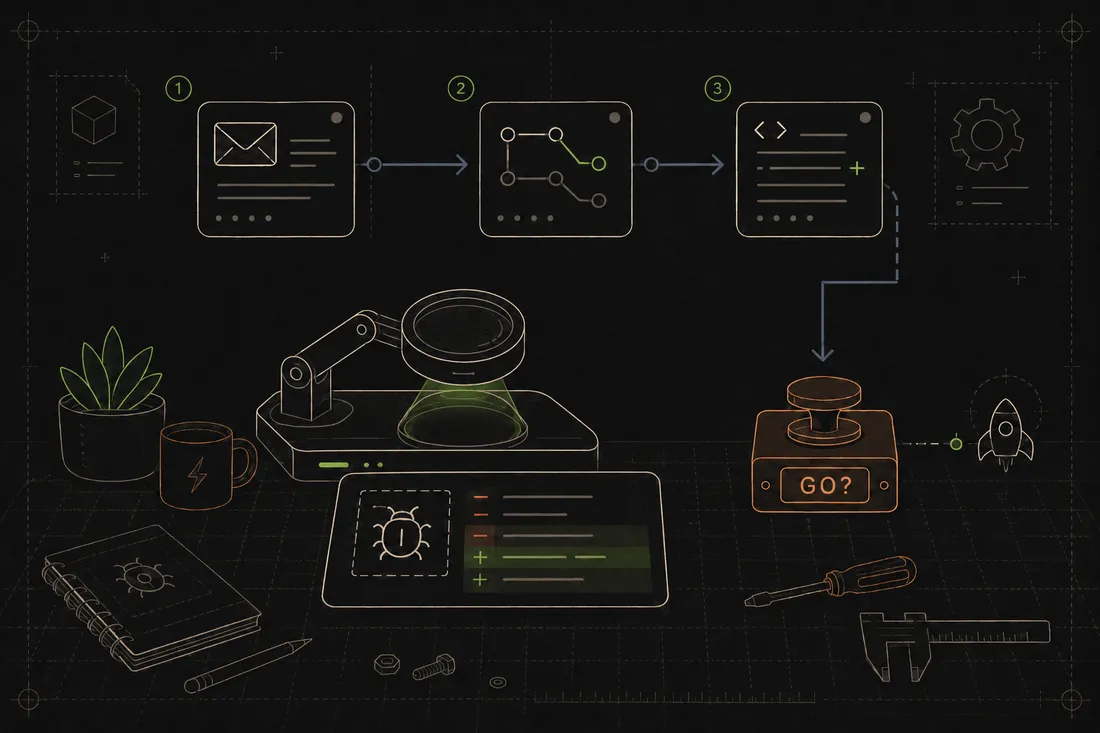
The whole point is that I shouldn't have to drop what I'm doing every time a bug comes in. Bug Bot handles the tedious first two hours automatically: reading the report, digging through the code, writing the fix, even drafting the reply to the person who sent it. But it won't deploy anything until I give the green light, by email or Signal message. It's the right balance: automation for the grunt work, human judgment for the final call.
What it does
When someone trusted emails a bug report to my address, Bug Bot intercepts it before I even see it. It creates a safe sandbox copy of the code, then launches a small team of AI assistants working in sequence, each double-checking the one before. When they're done, Bug Bot emails me a plain-English report of what was found, what was changed, and a draft reply for the person who reported it. The fix sits on a branch (nothing touches the live app) until I reply "GO" to the email or sends a Signal message. Only then does Bug Bot run the deploy. Security-flagged bugs require an extra human review step and can never auto-deploy no matter what.
Why it's neat
Robots do the boring first two hours
Investigation, code digging, drafting a reply - Bug Bot handles all of it so I can focus on things that actually need my brain.
Nothing ships without a human saying so
The daemon holds the deploy key, not the AI; no fix can reach production until I explicitly approve it.
A whole team reviews the fix
Rather than trusting one assistant, Bug Bot runs a few assistants working in sequence, each double-checking the one before.
How it works
1. A bug report email arrives
Signal-router (my email-routing daemon) spots the report and drops it in Bug Bot's queue.
2. A team of assistants gets to work
Bug Bot opens a safe copy of the codebase, then runs a chain of AI assistants - researcher, implementer, reviewer - each building on the last.
3. I get a full report by email
Bug Bot sends a plain-English summary of the bug, the fix, and a draft reply to the reporter - all before I've touched a thing.
4. I say "go" (or don't)
A "GO" reply to the email (or a quick Signal message) triggers the deploy; silence means nothing changes.